eSIM vs Second Number App: Which Is Better for a Second Line?
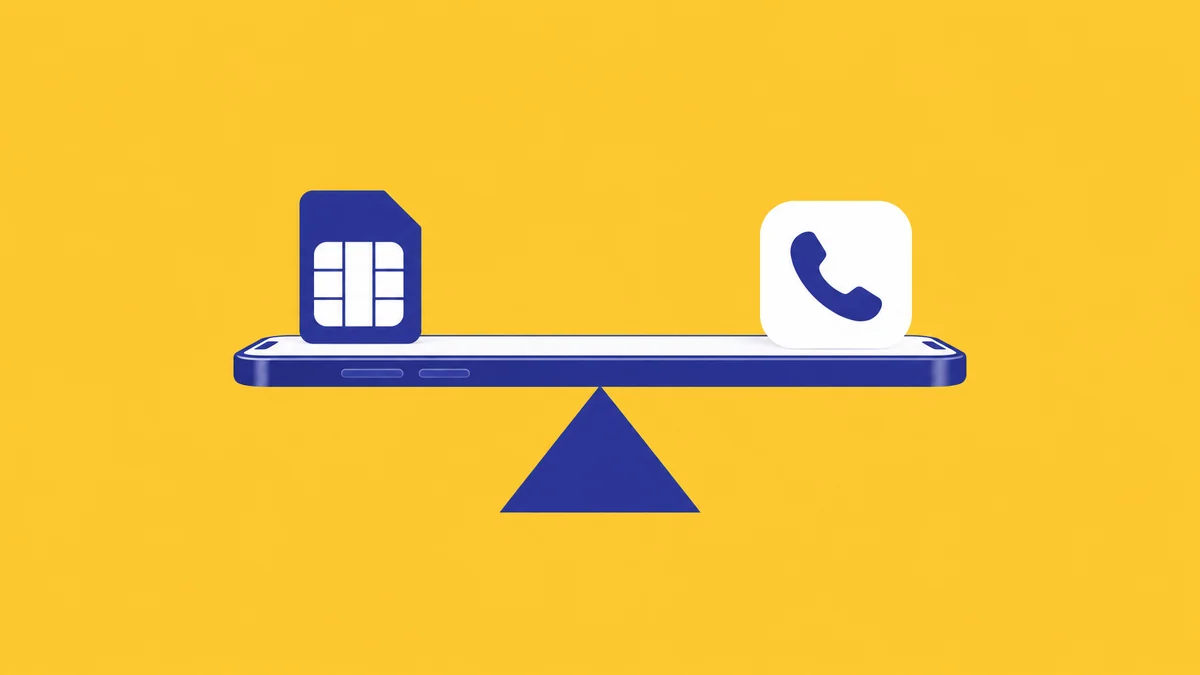
A carrier eSIM is a full second line with texting and data, but it needs a second plan. A second-number app is a lighter number for codes and calls. Here's how to choose between an eSIM and an app.
9 min read
On this page· 10 sections
Key takeaways
- A carrier eSIM is a full second line: calls, texting and usually data, in the iPhone's own Phone and Messages apps. It needs a second carrier plan.
- A second-number app puts a number inside an app. There's no second plan with a carrier, and the number can come from another country.
- An eSIM is not automatically a phone number. Data-only eSIMs, common for travel, have no number at all.
- Need to text from the second line? Choose the eSIM. 2Phon receives verification codes and makes and takes calls. It doesn't send texts.
In the eSIM vs second number app question, neither one wins every time. A carrier eSIM is better when you want a complete second line, with texting and data, and you're happy to pay for a second plan. A second-number app is better when you want a separate number for sign-ups and calls without another carrier plan, or a number from a country your carrier doesn't serve.
This guide helps you choose. It covers what each option really is, what each does better, what each needs, and which one fits common situations. Where an app is the better fit, 2Phon is an iPhone app that gives you a real second number from dozens of countries for verification codes and calls. It doesn't send texts, and that matters for this choice, so we say it up front.
If you're new to the idea, start with what a second phone number is.
eSIM vs second number app: the short answer
Choose a carrier eSIM for a full phone line, and an app for a lighter number that does two jobs: codes and calls. The table shows where they differ. The app column describes 2Phon; other apps vary, so check each one's own listing.
| Carrier eSIM (second line) | Second-number app (2Phon) | |
|---|---|---|
| What it is | A carrier plan installed on the iPhone | A number inside an app |
| Needs a second carrier plan | Yes | No |
| Make and take calls | Yes | Yes |
| Receive verification codes | Yes | Yes |
| Send texts | Yes | No |
| Where the number is from | The country where the carrier operates | Dozens of countries |
| Where calls and codes show up | Phone and Messages apps | The 2Phon app |
| How you pay | A plan with the carrier | A subscription through the App Store |
| How long the number is yours | While you keep the plan | While the subscription is active |
eSIM details in this article come from Apple's support pages Using Dual SIM with an eSIM and Set up eSIM on iPhone, checked on November 11, 2026.
Is an eSIM a second phone number?
No. An eSIM is a digital SIM, and a SIM only holds a carrier plan. You get a second phone number when the plan on that eSIM includes one. Apple describes an eSIM as a digital SIM built into the iPhone that replaces the physical SIM card.
This is where many people get stuck. There are two very different kinds of eSIM plans:
- A plan with a number. A regular line from a mobile carrier, or a prepaid plan from a local carrier abroad. Apple's guide to eSIM while traveling (checked November 11, 2026) notes that many local prepaid plans come with a local phone number.
- A data-only plan. Many travel eSIMs sold by worldwide providers and apps give you mobile data and nothing else. There is no number to call and no number to receive a code on.
So before you buy an eSIM as a "second number," read the plan details. If the listing talks only about gigabytes and countries, it's a data plan. Look for calls and a phone number in the description.
The same check works the other way. If an App Store listing uses the words "eSIM" and "second number" together, look at what you would actually get: a carrier plan that installs in Settings → Cellular, or a number that lives inside an app.
What does a carrier eSIM do better?
A carrier eSIM gives you the most complete second line. It's a real plan with a real carrier, and iPhone treats it exactly like your first line.
- Texting. You can send and receive texts from the second number. According to Apple, both Dual SIM numbers can use iMessage, SMS and MMS, and both can make and receive voice and FaceTime calls.
- Built into the iPhone. Calls arrive in the Phone app and texts in Messages. You label each line, such as Personal and Work, and pick one before you dial.
- Data. A plan with data also gives you a second mobile network, which is handy as a backup. Only one line at a time uses cellular data.
- Long-term use. A line you pay a carrier for and plan to keep for years is the right home for your bank, your main email and account recovery.
The cost of all that is the plan itself. Each number is a separate line with its own bill, and the number comes from the country where that carrier operates.
For setup steps and how two lines behave day to day, see how two phone numbers work on one iPhone.
What does a second-number app do better?
A second-number app is lighter: you add a number without adding a carrier. The number lives in the app, and your SIM, your eSIM and your personal number stay as they are.
- No second carrier plan. You install an app and subscribe through the App Store. There's no carrier to sign up with.
- Numbers from other countries. A carrier sells numbers from the country it operates in. With 2Phon you pick a number from dozens of countries, which helps when you need a number from a country you don't live in. Our guide to getting a US phone number from abroad shows how the options compare.
- It doesn't take one of your two lines. Dual SIM runs two lines at once. If your home line and a travel eSIM already fill both, an app number still fits next to them.
- Quick to start. With 2Phon you pick your number in the app and set up in minutes.
- A clear wall between numbers. Calls and codes for the second number arrive in the app, apart from your personal calls.
Apps have limits too, and they differ from app to app. Many issue internet-based (VoIP) numbers, which some services refuse for verification. Some offer numbers from only one or two countries. A second-number app doesn't come with mobile data. And each app does a different job: some are built around texting, others around calls or codes. Our comparison of the best second phone number apps for iPhone goes through them one by one.
2Phon's own limits, so there are no surprises: it doesn't send text messages, it's iPhone only, and calls use minutes in the app.
Which is better for verification codes?
Both work, as long as the number is a real mobile number. A code goes to whichever number you gave the service, and services care about the type of number, not about whether it sits on an eSIM or in an app.
A carrier eSIM line with a number is a mobile number by definition, so it behaves like any other phone line. Codes land in Messages.
With apps, it depends on the number. Some services check the line type and turn away internet-based numbers. 2Phon numbers are real mobile numbers, not VoIP, so the popular apps that verify by phone accept them. The code arrives in 2Phon with a push notification, usually within seconds, and if a service offers "Call me instead," the automated call rings on your 2Phon number. Virtual vs real phone numbers explains why the number type matters.
What does each option need?
The eSIM route needs a compatible iPhone and a carrier; the app route needs an iPhone and an App Store subscription.
For a second carrier line on an eSIM, Apple lists these requirements:
- An iPhone XS, XS Max, XR or later. Apple adds that "iPhone 13 models and later also support Dual SIM with two eSIMs."
- A carrier that supports eSIM, and a plan with that carrier.
- An unlocked iPhone if you mix carriers. In Apple's words: "To use two carriers, your carrier must unlock your iPhone, or both plans must be from the same carrier."
If you want a number from another country this way, you become a customer of a carrier there. Each carrier sets its own sign-up terms, so check what it asks for before you count on it.
For the app route with 2Phon, you need an iPhone. Billing is an auto-renewing subscription through the App Store. You can start with a free trial; current plans are shown in the app.
eSIM or app: which should you pick?
Pick by the one thing you can't do without.
- You need to text from the second number: get a carrier eSIM. An app built for codes and calls, like 2Phon, won't do that.
- You want a full second line with its own data: carrier eSIM.
- The number is for your bank or account recovery: a carrier line you'll keep for years.
- You want a number for app sign-ups, so your personal number stays off forms: a second-number app with real mobile numbers. See how to receive verification codes safely.
- You want a number from another country without becoming a carrier's customer there: an app.
- You want a separate number for calls with buyers, clients or dates: either works. An eSIM puts those calls in your Phone app; an app keeps them apart. Texts sent to a 2Phon number do show up in the app, and you answer with a call.
- You only need mobile data abroad: a data-only travel eSIM. That isn't a second number at all.
- You don't want another monthly carrier bill: an app.
Still not sure whether you need a second line? Read the situations where a second phone number helps.
If you go the app route, use our second phone number app checklist and compare free vs paid second number apps.
Can you use an eSIM and a second-number app together?
Yes, and it's a common setup. They don't compete for the same slot: the eSIM is a line on the iPhone, and the app number is on top of whatever lines you have.
Travel is the classic case. Your home number stays on for bank codes, a travel eSIM carries data, and an app number handles local sign-ups and calls you'd rather keep off your personal line. Our guide to choosing a phone number for travel walks through that setup step by step.
At home, the same idea works in a simpler form: your carrier line for people and your bank, and a second number in an app for everything that asks for a phone number.
Where 2Phon fits
2Phon is the app side of this comparison. It's an iPhone app that gives you a real second phone number from dozens of countries, with no second carrier plan. You use it to receive verification codes from WhatsApp, Telegram, Google and the other popular apps that verify by phone, and to make and take real calls, at home or abroad. People you call see your 2Phon number, not your personal one.
It isn't a replacement for a carrier line. It doesn't send texts, and the number is yours to keep while your subscription is active. If those limits are fine for what you need, it's rated 4.8 on the App Store with 30,000+ ratings.
Get 2Phon on the App Store: a real second number for verification codes and calls, on your iPhone.
The bottom line
A carrier eSIM is the better second line when you need everything a phone plan does, texting included. A second-number app is the better choice when you need a separate number for codes and calls and don't want a second plan. Plenty of people end up with both.
If the app route fits, download 2Phon and use your new number the next time an app asks for one. To compare every way of adding a number, see how to get a second phone number on iPhone.
Frequently asked questions
Is an eSIM the same as a second phone number?
No. An eSIM is a digital SIM that holds a carrier plan. You get a second phone number only if the plan on that eSIM includes one. A data-only eSIM has no number for calls or codes.
Does a travel eSIM give me a phone number?
It depends on the plan. Apple notes that many prepaid plans from local carriers come with a local phone number, while other travel eSIMs are data only. Check the plan details before you buy.
Can I use an eSIM and a second-number app on the same iPhone?
Yes. A second-number app such as 2Phon lives in an app, so it sits next to whatever SIM or eSIM lines your iPhone already runs. Many travelers keep their home line, add a travel eSIM for data, and use an app number for local sign-ups and calls.
Which is better for verification codes, an eSIM or an app?
Both can work if the number is a real mobile number. A carrier eSIM line is one by definition. With apps it depends on the number type, because some services refuse internet-based (VoIP) numbers. 2Phon numbers are real mobile numbers, not VoIP.
Can I send texts from a 2Phon number?
No. 2Phon receives verification codes and makes and takes real calls. It doesn't send SMS or MMS. If you need to text from your second line, a carrier eSIM is the better choice.
Written by
2Phon TeamProduct & Privacy
The people building 2Phon. We write about second phone numbers, online privacy, verification codes, and getting the most out of the app.
Keep reading
All articles
Guides7 min read
Best Second Phone Number Apps for iPhone, Compared
The best second phone number app depends on what you need it for — texting, a free US number, or a real number for verification codes and calls. Here's a fair comparison for iPhone.
Guides10 min read
Second Phone Number Apps: What to Look For Before You Pay
Before you pay for a second phone number app, check ten things — the kind of number, the country, whether it gets your codes, how calls are billed, and what happens to the number when you cancel.
Guides9 min read
Phone Number for Travel: Codes and Calls While Abroad
The right phone number for travel is really three lines with three jobs. Keep your home number for bank codes, add a travel eSIM for data, and use a second number for local apps and calls.